Behaviour is never the beginning of the story.
It is the end of it.
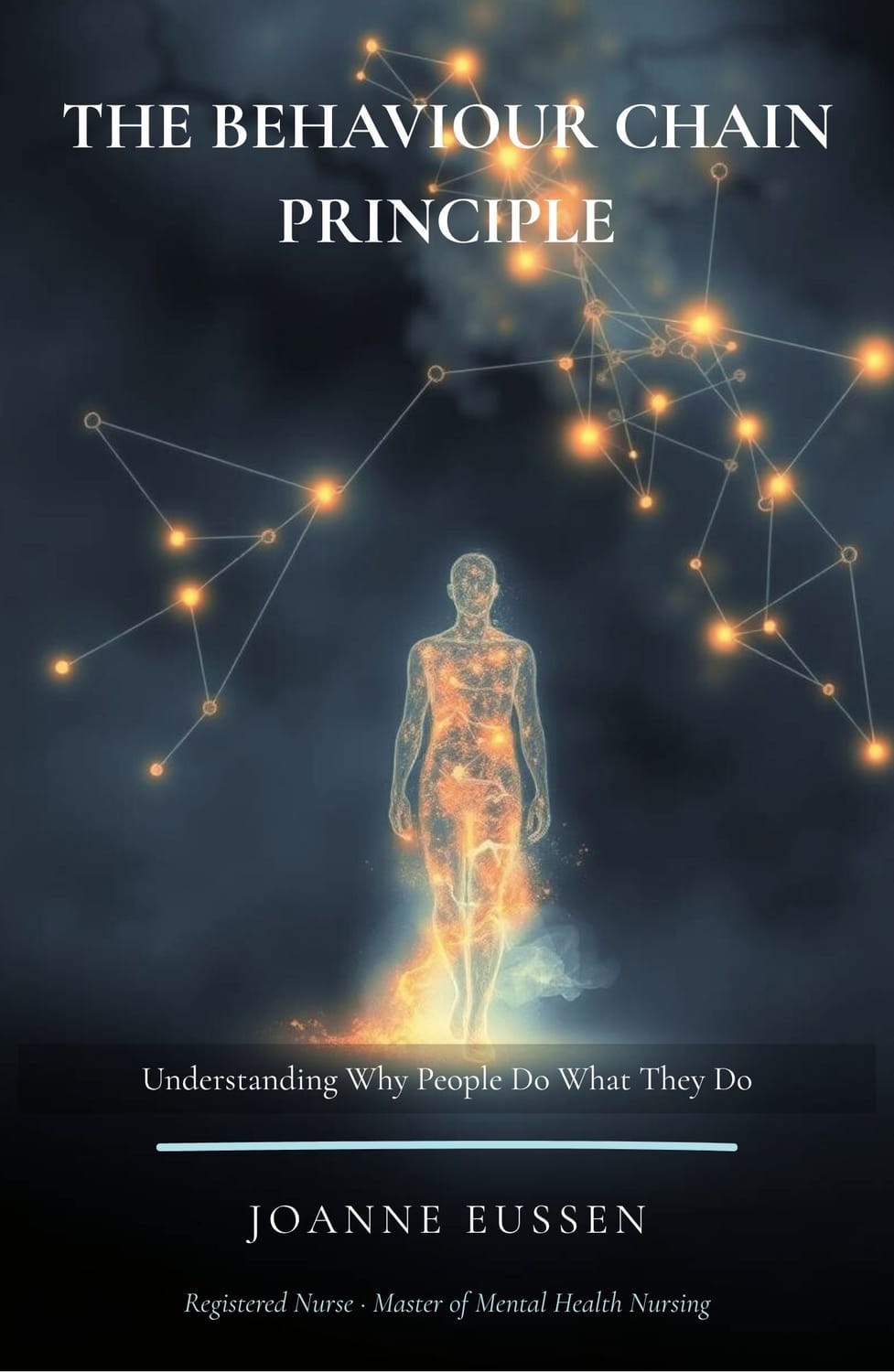
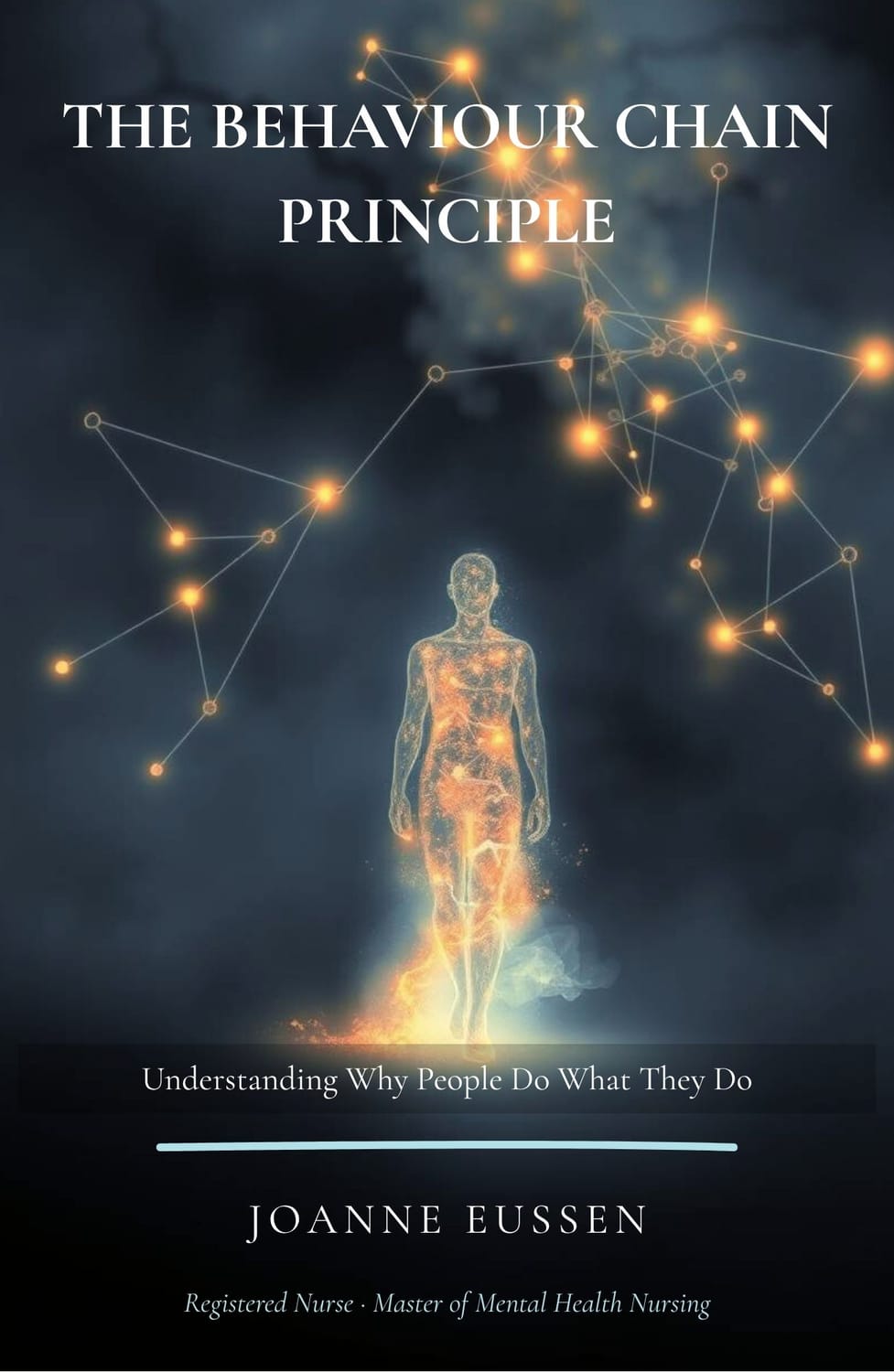
The Behaviour Chain Principle is a clinical framework for understanding why people do what they do.
Developed by a Registered Nurse with a Master of Mental Health Nursing
and sixteen years on the frontline of acute mental health.
You have been in that moment
A situation escalates without warning. A person you have been supporting for months does something that makes no sense. An interaction that felt calm suddenly isn't.
And you are left wondering: what just happened?
Most training gives you procedures for after the moment. Incident reports. De-escalation scripts. Risk frameworks.
But nobody has shown you what was hiding in plain sight before behaviour became visible.
The Behaviour Chain Principle changes that.
What is The Behaviour Chain Principle?
Behaviour does not begin at the moment you see it.
By the time a person escalates, withdraws, refuses, or shuts down, a chain of internal events has already taken place. Environment has placed pressure on the links. Memory has contributed its weight. Emotion has activated. Expectation has formed.
What looks sudden from the outside has been building through every link in the chain.
The Behaviour Chain Principle teaches you to see those links.
Once you see them, everything about how you understand, and how you respond - begins to change.
This framework is used by support workers, clinicians, team leaders, and organisations across Australia to build safer, more consistent frontline practice.
About the Author
Developed by Joanne Eussen Registered Nurse · Master of Mental Health Nursing.
Sixteen years in acute and community frontline mental health.
Founder, The Resilience Echo
This is not theory adapted from a textbook. It is a clinical framework built from sixteen years of real frontline decision-making in acute mental health settings, with people in crisis, under pressure.

WHO ARE YOU?
I am a support worker, peer worker, carer, or family member.
I want to understand this framework and apply it to the people I support.
The full framework is available as a paperback book .
240 pages, thirteen chapters, written for the reality of frontline work.
What readers are saying
"This looks amazing - I'll be buying the paperback for sure"
Registered Nurse
"I Love it. So clear and easy to read"
Peer Worker
"Your book reads so smoothly - Well done!"
Peer Worker
"I love it - I'm going to get my 14 year old daughter to read it"
Peer Worker & Mum
Amazon Reviews
5 out of 5 stars
Insight into challenging behaviours
This book helped me understand some of my challenging clients with special needs, and how to support them. The author has provided practical strategies with no fillers. It was a great read, highly recommended this book for anyone supporting people with special needs.
5 out of 5 stars
Informative and succinct
This book helped me understand the relevant processes that preceded a range of behaviours. Understanding this gives me the ability to manage myself and the situation. Very relevant and usable in the real world.
5 out of 5 stars
Relevant and practical
Clear, concise, and informative. With practical information and operettas to put it into action. This book delivers exactly what it says it does.
The Behaviour Chain Principle is one idea.
But it is an idea that changes how you read every difficult moment, on shift, in supervision, at home.
It does not ask you to follow a new procedure.
It asks you to see what was already there.
Also from The Resilience Echo
Frontline Safety and Behaviour Response Workbook → theresilienceecho.com/frontline-safety-training-workbook
© 2026 Joanne Eussen. The Resilience Echo. All rights reserved.
Create Your Free Account